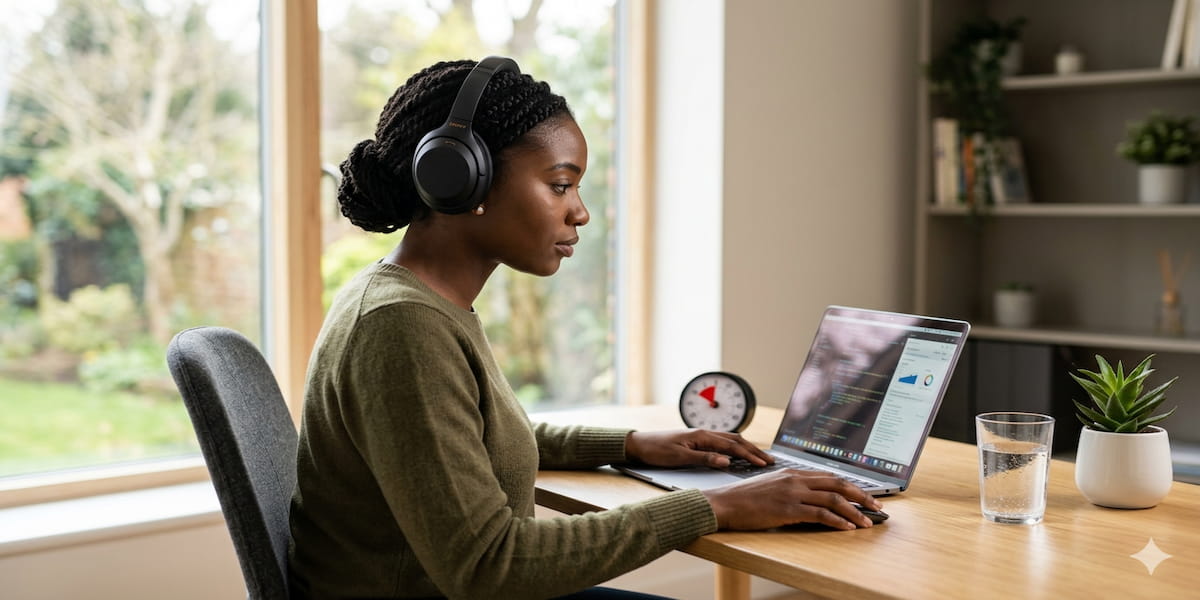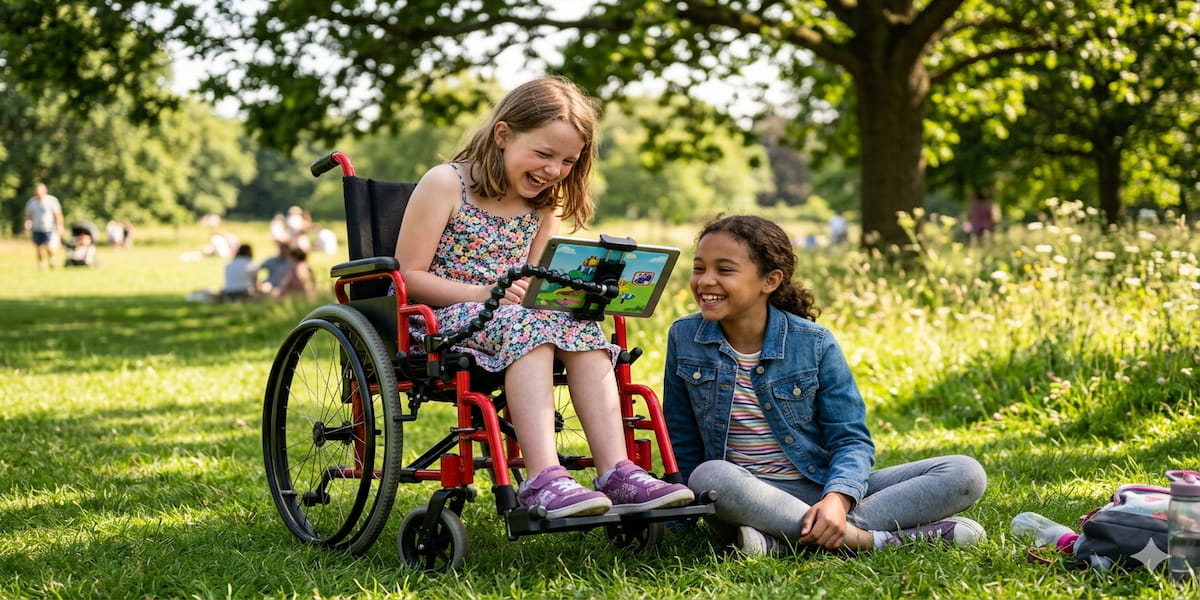
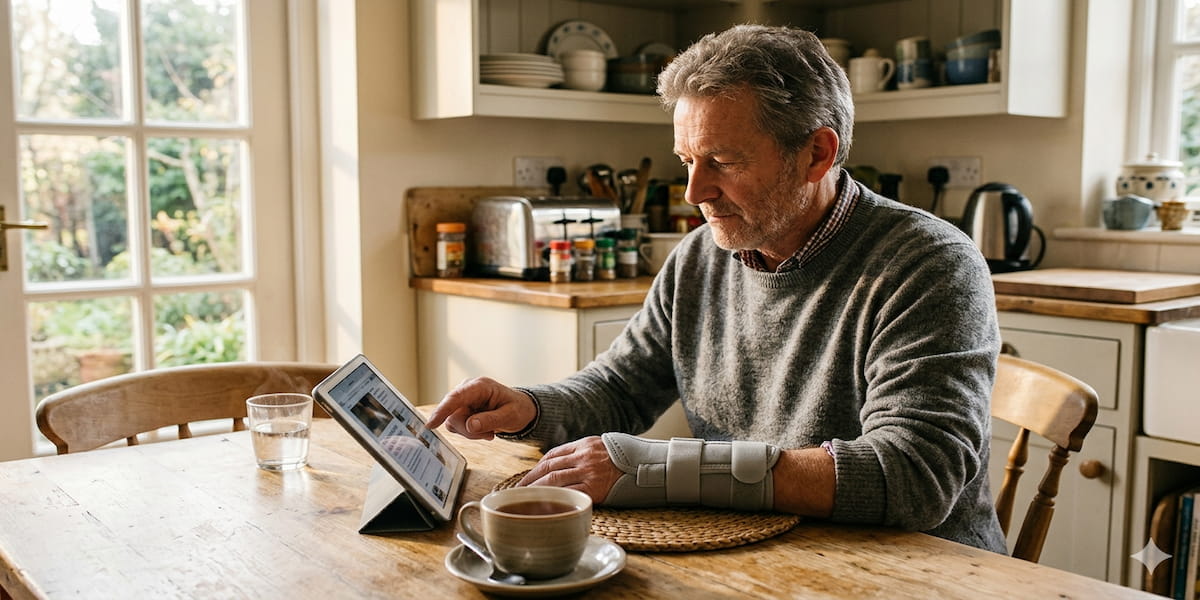
No two strokes are the same. One person might struggle to find words. Another might have weakness down their left side, making it hard to button a shirt or carry a cup of tea. Someone else might feel utterly exhausted by mid-morning, even after a full night's sleep.
Stroke can affect communication, movement, swallowing, memory, concentration, and emotional wellbeing — sometimes all at once, sometimes just one or two things. Recovery is possible for many people, but it takes time, good support, and often the right tools.
That's where assistive technology comes in. AT won't replace therapy or human connection, but it can fill gaps, build confidence, and help you or someone you love get back to doing the things that matter. Here's a plain-English guide to what's available in Australia in 2026.
Communication Aids — Especially for Aphasia
Aphasia is the term for difficulty with speaking, understanding, reading, or writing after stroke. It affects around one in three stroke survivors. It is not a sign of reduced intelligence — the mind is intact, but the brain's language pathways have been disrupted.
Lingraphica TalkPath is an app built specifically for people with aphasia. It offers speech therapy exercises across speaking, reading, writing, and listening — and tracks progress over time so you can see how far you've come. It's available on tablet and phone, which means you can do short sessions at home between appointments with your speech pathologist.
Text-to-speech apps like Natural Reader, or the built-in text-to-speech on iPhones and Android phones, let you type what you want to say and have the phone say it out loud. For someone whose speaking has been affected but who can still type (even slowly), this can be a lifeline — in a café, at a medical appointment, or just chatting with a grandchild.
Voice amplifiers are small, wearable devices that amplify a quiet or weak voice. Some stroke survivors find their voice becomes soft or husky — a clip-on amplifier can make everyday conversations much less tiring.
And don't overlook low-tech options. A simple communication board with pictures, words, and phrases can be more reliable than any app when someone is tired or anxious. Alphabet boards let a person point to letters to spell words. Basic yes/no cards are often the first thing a speech pathologist will introduce after stroke. Simple, durable, and always charged.
Mobility Aids
Stroke frequently causes weakness or paralysis on one side of the body — a condition called hemiplegia or hemiparesis. The right mobility aid depends on how much support is needed and where you are in recovery.
Quad canes and hemi-walkers are designed for people who have some stability but need support on their weaker side. A quad cane has four small feet at the base for extra stability; a hemi-walker is a compact frame used with one hand.
Rolling walkers (rollators) suit people whose balance has been affected. They have four wheels, hand brakes, and often a seat — useful when fatigue kicks in mid-walk.
Ankle-foot orthoses (AFOs) are rigid or semi-rigid braces prescribed by a physiotherapist or occupational therapist for foot drop — a common effect of stroke where the foot cannot lift properly during walking. A well-fitted AFO can transform someone's ability to walk safely.
Wheelchairs come in two main types. A transport chair (lightweight, pushed by someone else) is often used in the early stages of recovery. A self-propelling manual or powered wheelchair may be recommended for longer-term needs or when arm strength allows independent movement.
At the more high-tech end, robotic and exoskeleton suits are becoming more widely available in Australian rehabilitation centres. The Mollii Suit uses gentle electrical stimulation to help muscles activate, and is used in some rehab programs to support movement re-learning. Ekso Bionics exoskeletons support people to stand and walk, even in early recovery. These aren't yet something you buy for home use, but they're worth asking your rehab team about if you're doing inpatient or outpatient rehabilitation.
Daily Living Aids
Some of the most useful AT for stroke recovery isn't high-tech — it's thoughtfully designed everyday equipment.
Getting dressed becomes a puzzle when you only have reliable use of one hand. Button hooks help fasten buttons one-handed. Elastic laces mean you never have to tie shoes. Adaptive clothing with velcro fastenings or magnetic buttons means getting dressed is faster and less frustrating. Your OT can show you one-handed dressing techniques that work with whatever clothing you already own.
In the kitchen, a Dycem non-slip mat (a brightly coloured rubber mat) stops bowls and chopping boards from sliding. A rocker knife lets you cut food using a rocking motion with one hand. Weighted cutlery helps people with tremor eat with more control. A kettle tipper holds the kettle in a frame so you can pour without lifting — a simple piece of equipment that removes a real safety risk.
In the bathroom, a shower chair or bench removes the need to stand for the whole shower. Grab rails — installed properly by a tradie — make getting in and out of the bath or shower much safer. A handheld showerhead lets you direct water one-handed. A long-handled sponge means you don't have to bend or reach awkwardly.
Memory and cognitive aids matter too. Many stroke survivors experience changes to memory, concentration, or organisation. Labels on cupboards and drawers reduce the mental effort of finding things. Large-button phones are easier to use when vision or fine motor control has changed. Smart speakers like Amazon Echo or Google Home can set reminders for medication, appointments, and daily tasks — hands-free, which matters a lot. An automatic pill dispenser with an alarm takes the stress out of managing multiple medications.
Rehabilitation Technology
Stroke rehabilitation has gone through a quiet revolution over the past decade. You're no longer limited to what you can practise in a clinic.
Constant Therapy is a clinician-recommended app for speech and cognitive rehabilitation. It covers language, memory, attention, and problem-solving exercises — all trackable so your speech pathologist can see what you've been working on between sessions. It's used by rehabilitation hospitals and stroke survivors working independently.
Virtual reality rehab systems are now available in some Australian rehabilitation centres. Rather than doing repetitive exercises with a therapist watching, you might practise reaching movements inside an engaging game-like environment. The repetition is still there — it's just a lot less tedious. Ask your rehab team whether any VR programs are available where you're being treated.
Telehealth has changed access to therapy, particularly for people in regional or rural Australia. If travel to appointments is difficult post-stroke, ask your speech pathologist, physiotherapist, or OT whether they offer telehealth sessions. Many do, and the quality is often just as good as in-person.
Funding Your AT
If you're under 65, stroke can meet the NDIS access criteria if your disability is permanent or likely to be permanent. The NDIS can fund a wide range of AT — from low-cost items like non-slip mats and button hooks through to powered wheelchairs, communication devices, and home modifications. Your treating team can provide supporting documentation for an NDIS access request.
If you're 65 or over, the aged care system is the relevant pathway. My Aged Care (1800 200 422) can connect you with a Home Care Package or the AT-HM (Assistive Technology and Home Modifications) scheme. This scheme provides funding for lower-cost AT and modifications without needing a full Home Care Package in place.
During your hospital stay, some AT will be provided as part of your acute and rehabilitation care — don't leave without knowing what's been organised and what happens next.
The Stroke Foundation runs a free helpline at 1800 STROKE (1800 787 653) and the EnableMe online community connects stroke survivors and their families across Australia. Both are worth using — you don't have to figure this out alone.
The OT's Role
An occupational therapist is your most important ally when it comes to AT after stroke. An OT will do a home assessment (often visiting your actual home) to understand where the challenges are and what equipment or modifications would help most. They can write NDIS justification reports, recommend and source specific equipment, and train you or your family to use it safely.
If you haven't been referred to an OT since leaving hospital, ask your GP for a referral — or contact the Stroke Foundation helpline for guidance on finding one.
A Note on Timing
Some AT is useful immediately after stroke. Other tools become relevant weeks or months later, as recovery progresses or plateaus. There's no single "right time" — the goal is always to match the tool to where you are right now, not where you might be in six months.
Recovery is rarely linear. Don't be discouraged if something that seemed helpful early on stops being as useful — that can actually be a sign of progress.
This article is for general information only and is not a substitute for medical or allied health advice. If you or someone you love has had a stroke, speak with your treating team about AT options that are appropriate for your specific situation. Eazilee's AT finder can help you explore tools by condition, challenge, and life goal.