For most people, home is where they feel safest and most themselves. The idea of leaving — moving into residential care or relying on others around the clock — can feel deeply unsettling, no matter your age or situation. The good news is that the right technology can make staying home for longer not just possible, but genuinely comfortable and safe.
This guide is for older Australians, people with disability, and the families supporting them. It covers what's available in 2026, how much things typically cost, and how you might fund them. You don't need to be a tech expert — most of the options here are designed to be simple to use.
Safety Technology
Feeling safe at home starts with knowing help is available if something goes wrong.
Personal Alarms and Fall Detection
A personal alarm is one of the most important pieces of technology for anyone living alone or at risk of falls. The classic option is a pendant alarm worn around the neck or wrist — press the button and it connects you to a monitoring centre or directly to a family member. Providers like Tunstall and LifeAlert offer 24/7 monitored services across Australia, usually for a monthly fee.
Wearables with automatic fall detection take this further. The Apple Watch (Series 4 and later) and Samsung Galaxy Watch both detect falls and can automatically call emergency services if you don't respond within 60 seconds. These work well for people who are active but at moderate fall risk.
For people living with dementia or who are prone to wandering, a GPS tracker worn as a watch or clipped to clothing lets family members check location in real time via a smartphone app. Brands like AngelSense and Tracki are worth looking into.
Smart Sensors
You might not want to wear something all the time — and that's okay. Motion sensors placed around the home can detect whether someone has moved through the kitchen in the morning, visited the bathroom, or been in the same spot for an unusual length of time. This information is quietly sent to a family member's app, so they can check in if something seems off without feeling intrusive.
Bed and chair sensors detect whether someone has got up or fallen out of bed, and door and window sensors can alert carers if someone leaves the house unexpectedly. These systems work well as a gentle safety net.
Smoke, Gas, and Flood Alarms
Standard alarms aren't always enough for people with hearing loss, low vision, or cognitive impairment. Interconnected alarm systems — where all alarms go off at once if one detects a problem — make it much harder to miss a warning. Some systems also send a phone alert to family members.
For people who are deaf or hard of hearing, there are alarms that use flashing strobe lights and bed-shaking vibrating pads rather than sound alone.
Mobility at Home
Moving around the house safely is often the biggest practical challenge. Small changes can make a big difference.
Grab Rails and Ramps
Grab rails in the bathroom, toilet, and hallway reduce the risk of slipping and help people get up from lower positions independently. Many can be installed without major building work — a local handyperson can often do this in a couple of hours. The Home Modification Information Clearinghouse (HMinfo) has a useful guide.
Portable aluminium ramps are a practical solution for steps at the front door or between rooms. For wheelchair users or those using a scooter, a permanent ramp may be worth the investment — and may be fundable through NDIS or My Aged Care.
Walking Aids
Quad canes provide four-point stability for people who need a bit more support than a standard walking stick. Rollators (walkers with wheels and a seat) are excellent indoors and outdoors — you can rest when needed and the brakes give you control on uneven ground. An occupational therapist can help you choose the right aid and adjust it properly.
Stair Lifts and Hoists
If stairs are becoming a barrier, a stair lift can transform access within a multi-storey home. They're available new and second-hand — second-hand can be significantly cheaper, though you'll want to check it's been maintained and installed correctly.
For people who need full assistance with transfers, patient hoists (portable or ceiling-mounted) allow carers to assist safely without injury to either person. Ceiling hoists can be installed in bedrooms and bathrooms and are often funded through the NDIS for people with higher support needs.
Smart Home Technology
Smart home devices have become genuinely life-changing for people with limited mobility or those who get fatigued easily. The best part: most of them are available at mainstream retailers and don't require any technical knowledge to set up.
Voice-Controlled Assistants
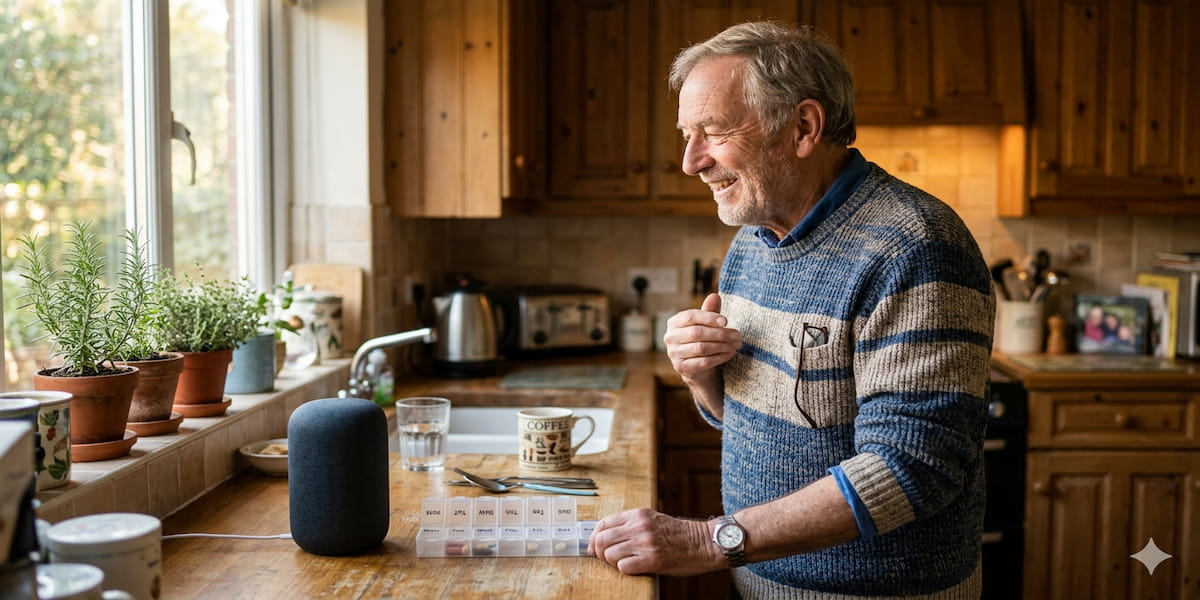
An Amazon Echo or Google Home device lets you control lights, the TV, heating and cooling, set reminders, make phone calls, and ask questions — all by voice. For someone who struggles to reach light switches or walk to the thermostat, this is a game-changer. These devices start from around $50.
Smart Lighting
Smart lights can be turned on and off by voice or phone, set to come on automatically at sunset, or triggered by motion. Motion-activated lights in hallways and bathrooms at night significantly reduce the risk of falls in the dark. Bulbs are available from most hardware stores and connect to your existing smart assistant.
Video Doorbells and Smart Locks
A video doorbell (Ring and Arlo are popular options) lets you see and speak to whoever is at the door from your phone or tablet — no need to rush to the door or get up from a chair. Smart door locks can be unlocked remotely from a phone, or opened with a keypad, which removes the need to fumble with keys. Both are particularly useful for people with arthritis or limited hand strength.
Smart Plugs
A smart plug fits into any standard power point and turns any ordinary appliance into a smart one — control a lamp, fan, or heater by voice or app. They typically cost $20–$40 each.
Daily Living Aids
Sometimes the simplest tools make the biggest difference to independence in everyday tasks.
Kitchen
Electric can and jar openers remove the need for grip strength. Kettle tippers hold the kettle on a stand so you can tilt it to pour without lifting. One-handed cutting boards with stainless spikes and corner guards hold food in place while you cut. Dycem non-slip mats keep bowls and plates from sliding. Long-handled reachers bring items on high shelves within reach.
Bathroom
Shower chairs and stools allow you to sit safely while showering. Raised toilet seats reduce how far you need to lower yourself. Toilet frames give you something to push up from. Long-handled sponges and bath boards reduce the need for bending and reaching.
Medication Management
Missing or doubling up on medications is a common and serious risk. Automatic pill dispensers (such as MedMinder or Hero) dispense the correct dose at the right time and can send alerts if a dose is missed. Apps like Medisafe send reminders to your phone. Many pharmacies also offer blister packaging (Webster-paks), where each dose is pre-sorted — ask at the counter.
Dressing
Button hooks and zipper pulls help people with limited hand function manage fastenings independently. Long-handled shoehorns and elastic laces mean you can put shoes on without bending down.
Staying Connected
Isolation is a real risk when mobility or health limits how much you get out. Technology can help bridge the gap.
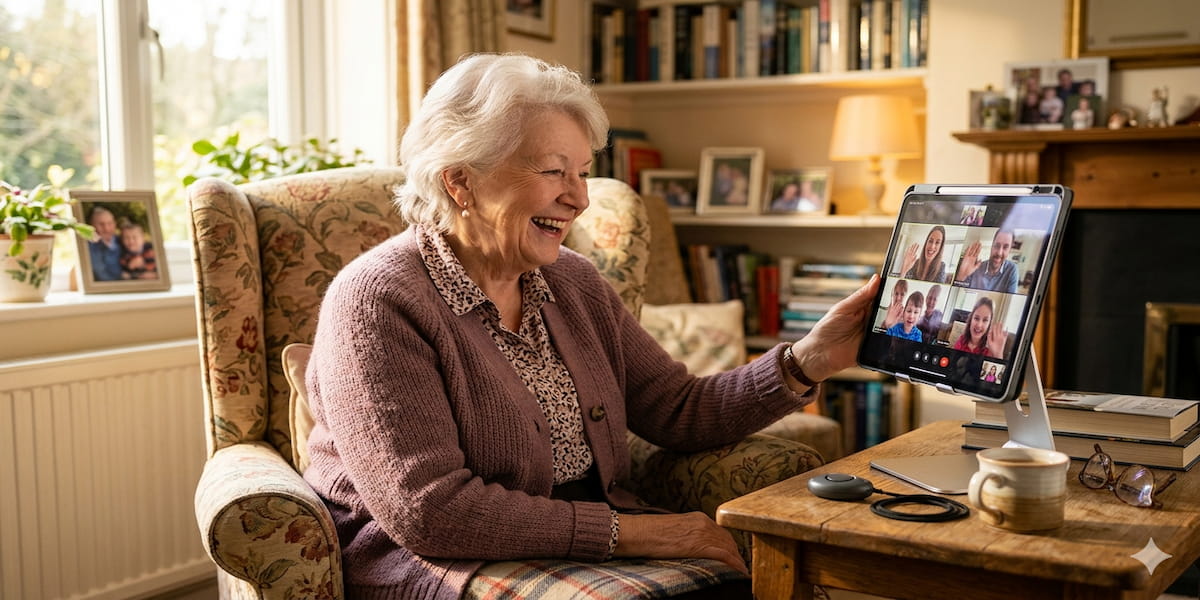
Large-button phones and tablets (Doro and Emporia are popular brands) are designed for people with low vision or cognitive impairment. Video calling on an iPad, JitterbugSmart phone, or Google Nest Hub lets you see family face to face from your armchair. For many people, a weekly FaceTime call with grandchildren is worth more than any gadget.
Telehealth appointments with your GP or specialist can now be conducted from home and are Medicare-funded for most conditions. This is especially valuable if getting to a clinic is exhausting or difficult.
Funding Options
Cost is often the biggest barrier. Here's where to look for help.
If you're over 65: Contact My Aged Care on 1800 200 422 or visit myagedcare.gov.au. The Support at Home program (which replaced Home Care Packages in 2024) funds personal care, home modifications, and assistive technology. The AT-HM Scheme provides up to $500 per year for lower-cost equipment without a package. The Commonwealth Home Support Programme (CHSP) can help with lower-level needs.
If you're under 65 with disability: The NDIS funds assistive technology and home modifications. Items under $1,500 can generally be purchased from your Core budget without an assessment. Items over $1,500 require supporting evidence, usually from an occupational therapist.
Veterans: Contact the Department of Veterans Affairs (DVA) — there is dedicated funding for AT and home modifications for eligible veterans.
OT assessment: For home modifications and higher-cost AT, an assessment from an occupational therapist is usually required (and strongly recommended). A good OT will identify what you need, write the justification report, and help maximise your funding approval.
A Note on Getting Started
It's tempting to try and do everything at once — don't. Start with the one or two things that would make the biggest difference to your safety or daily life right now. A personal alarm, a grab rail, or a smart speaker might be the first step. You can build from there.
If you're not sure where to start, Eazilee can help you find the right assistive technology for your situation. Use our free recommendation tool and get personalised suggestions in minutes.
This article is for general information only. Products, prices, and funding programs change regularly. Always confirm current availability and eligibility with the relevant provider or funding body. For personalised advice, speak with an occupational therapist or contact My Aged Care (1800 200 422) or the NDIS (1800 800 110).